


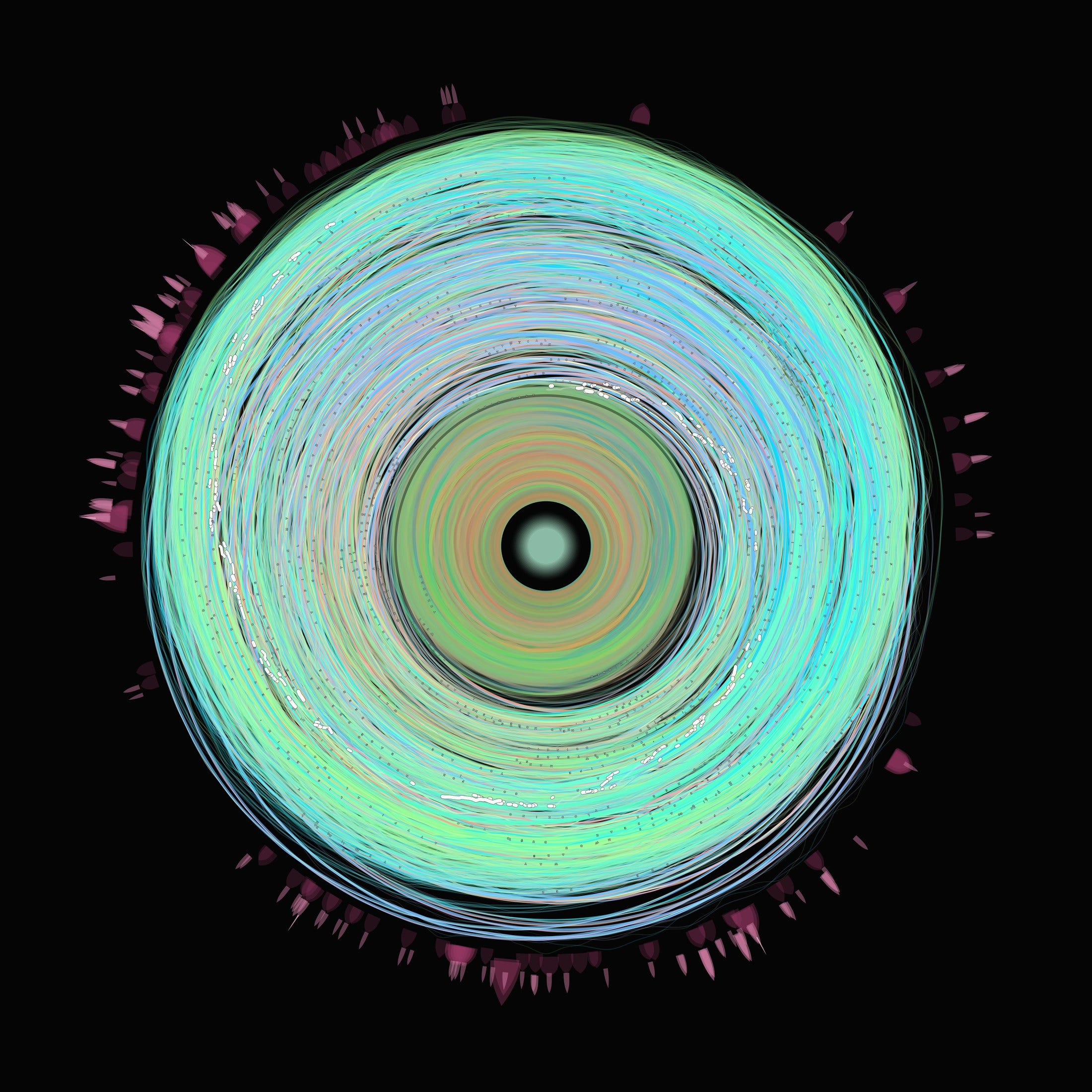
There is a question at the centre of this song, and Taylor Meier asks it the way you ask something you already fear the answer to: Are you a life force? Not a declaration, not rhetorical. A plea, aimed at the person who might be able to bring a numb man back to life. The whole song is built to earn that question. And the sonicture answers it in a way you can hear the moment you know to listen for it: the pulse is missing while the numbness is being named, and it arrives, late, only after.
Look at where the drums are. For the first stretch of the song they barely exist, a flicker, then nothing. Sections open with a tick of percussion and then fall to a genuinely bare arc, no marks at all, right around the place the confession lands hardest: I’ve been so numb for so many years. The song is telling you it’s numb, and the geometry is numb with it. The rhythm keeps almost starting and then withdrawing, the way feeling comes back to a limb that’s been asleep. A wakening, a retreat, a longer wakening.
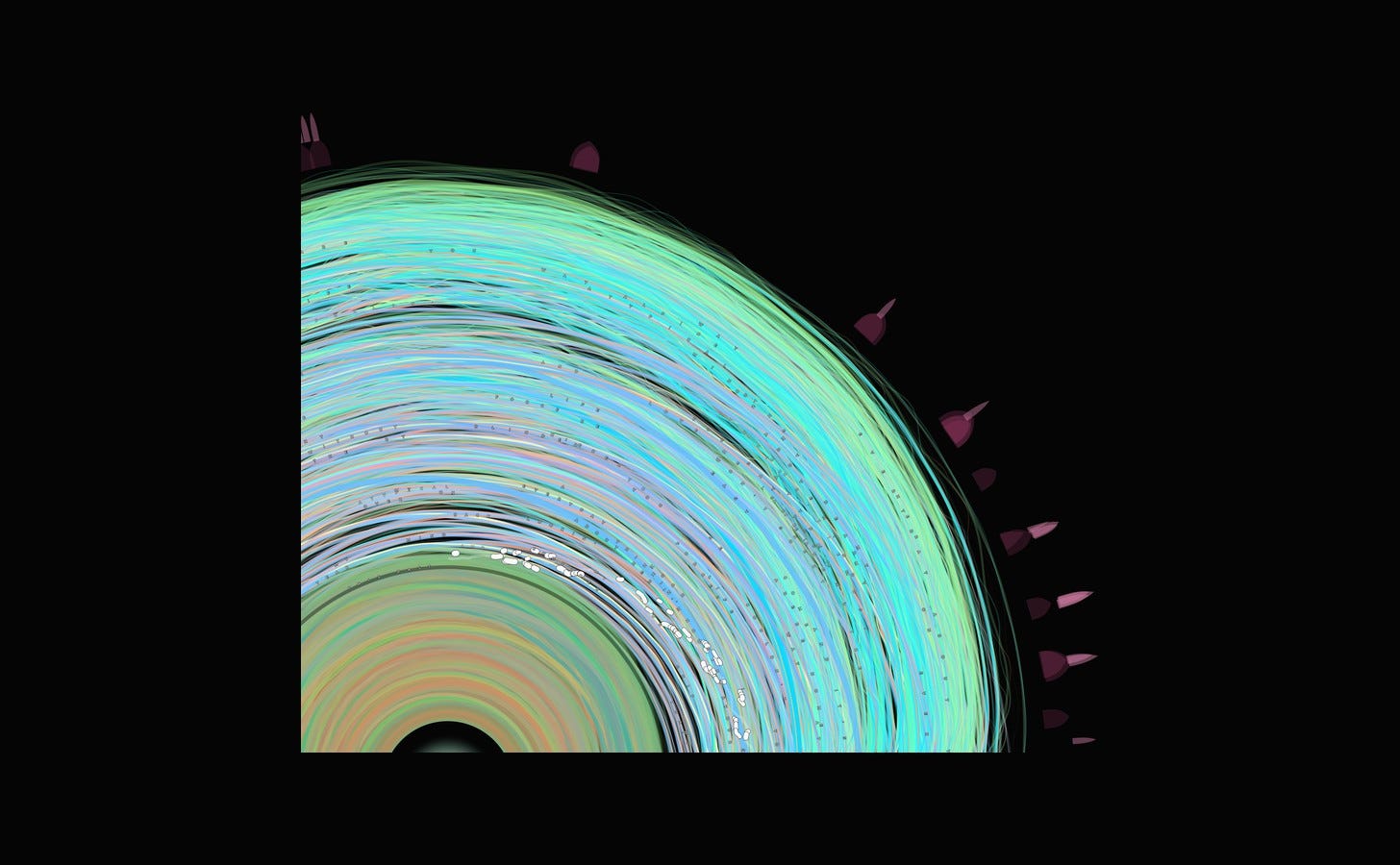
Then, the moment that confession is out, it commits. The rose marks, dusty pink, the palette's own complement, launched from the drifted outer edge, thicken along the bottom of the wheel, thin again through the lower left, and crowd the upper left, until the final choruses run at better than two attacks a second where the opening stretch ran a few scattered ticks. This is not someone keeping time from bar one. This is a pulse that had to be talked into existing.
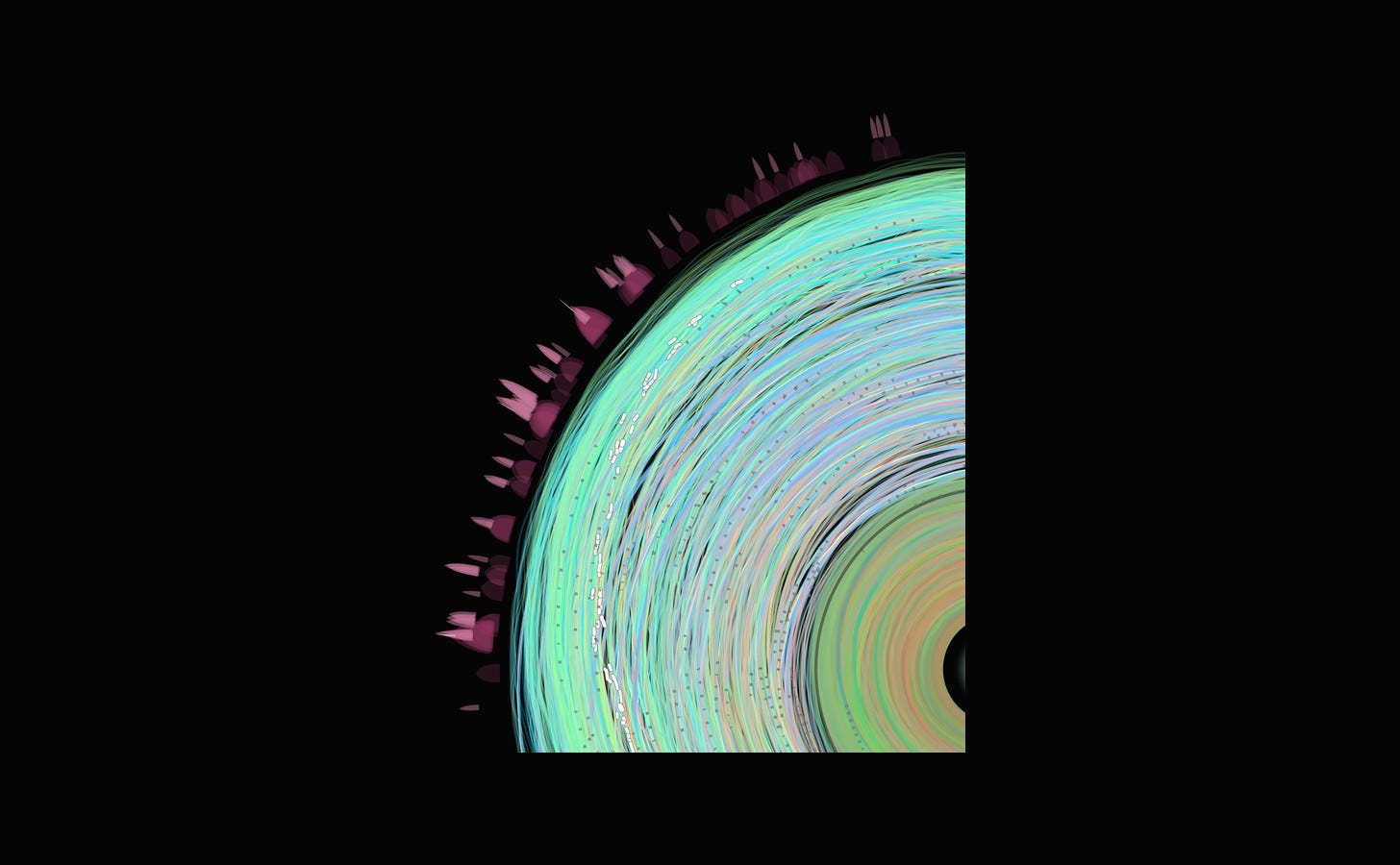
Now I’m thinkin’ about her everyday. That’s the turn the drums are answering. The numbness is past tense; the life force is present tense; and the percussion, which measured almost nothing while he was numb, is measuring the everyday now. The question Are you a life force? gets asked again and again into that thickening pulse, and each time it lands, there’s more rhythm underneath it than the last. The song doesn’t answer the question in words. It answers it by finally having a heartbeat.
There’s one more withdrawal before the end, and it’s the most telling. Just before the final push, an arc of the rim goes completely bare again: the drums and their marks drop out entirely for the second look-back, from Looking back over my life through It’s just me and the stars tonight, twenty seconds of bare rim. Then they reemerge for the final choruses at their peak density. The life force is asked to prove itself one last time by its absence. And it returns.
Now the colour. Start at the centre: the sun is every pitch in the recording averaged into one, and it emerges green. The first rings around it, the opening minute, driving through West Virginia engraved on them, are the warmest in the portrait, coral threaded through the green; by the first chorus spring green and jade have taken the field, and they hold it almost all the way out. Those are A and E, the two pitches carrying most of the harmony, and A is home: the song lives in A, and A fills the wheel in a wash the colour of a season. It matters which season. I’ll be home come next spring. The whole promise of this song is deferral: home later, love later, say you love me later, by and by. The portrait says he never really left. The colour he is promising to come home to is the one he is already singing inside.
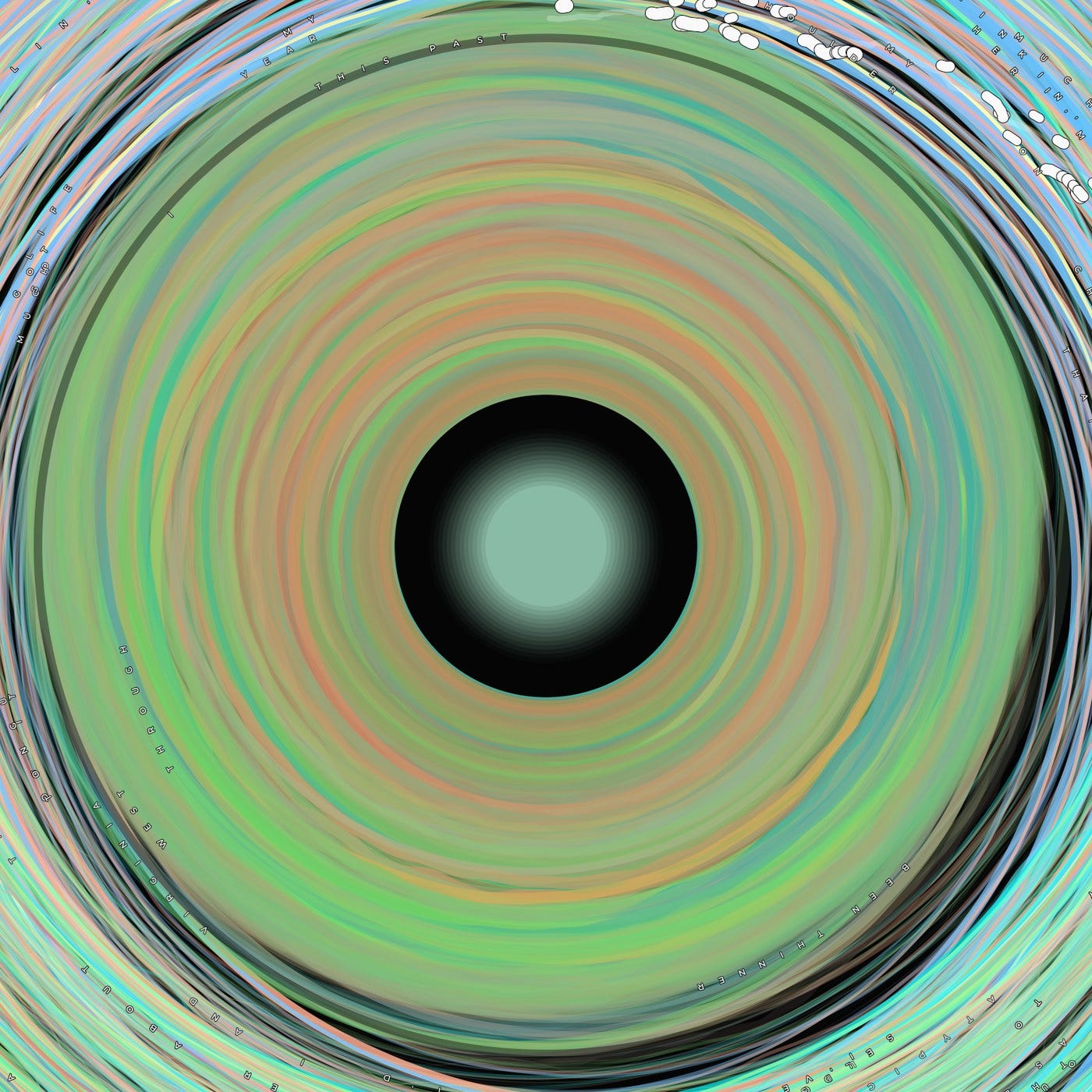
Spent the most of it tongue-tied. The early rings, where that reckoning sits, carry the wobbliest edges in the whole portrait. The harmony is at its most unstable right at the open, in the first breath of the song, and steadies as it goes. Which is the same story the drums are telling from the other direction: strain at the start, pulse at the finish. A man who spent the most of it tongue-tied, finding by the end of four and a half minutes there’s a heartbeat under it.
That’s why the band opens with this one when they introduce themselves. It’s the song where the numbness admits it wants to be undone. And you can watch the wanting arrive, mark by rose mark, pleading along the wheel.
Listen: Spotify | Apple Music | Amazon Music | YouTube