


There is no last note. There is a chord that refuses to become the past: E major struck at once on three pianos and a harmonium, the faders climbing after it as it dies, dragging the sound of the room up with it until you can hear the air itself. Over forty seconds of one resolved chord being kept alive. It became one of the most famous single chords in rock precisely because it will not end. The song is over. Its resonance remains.
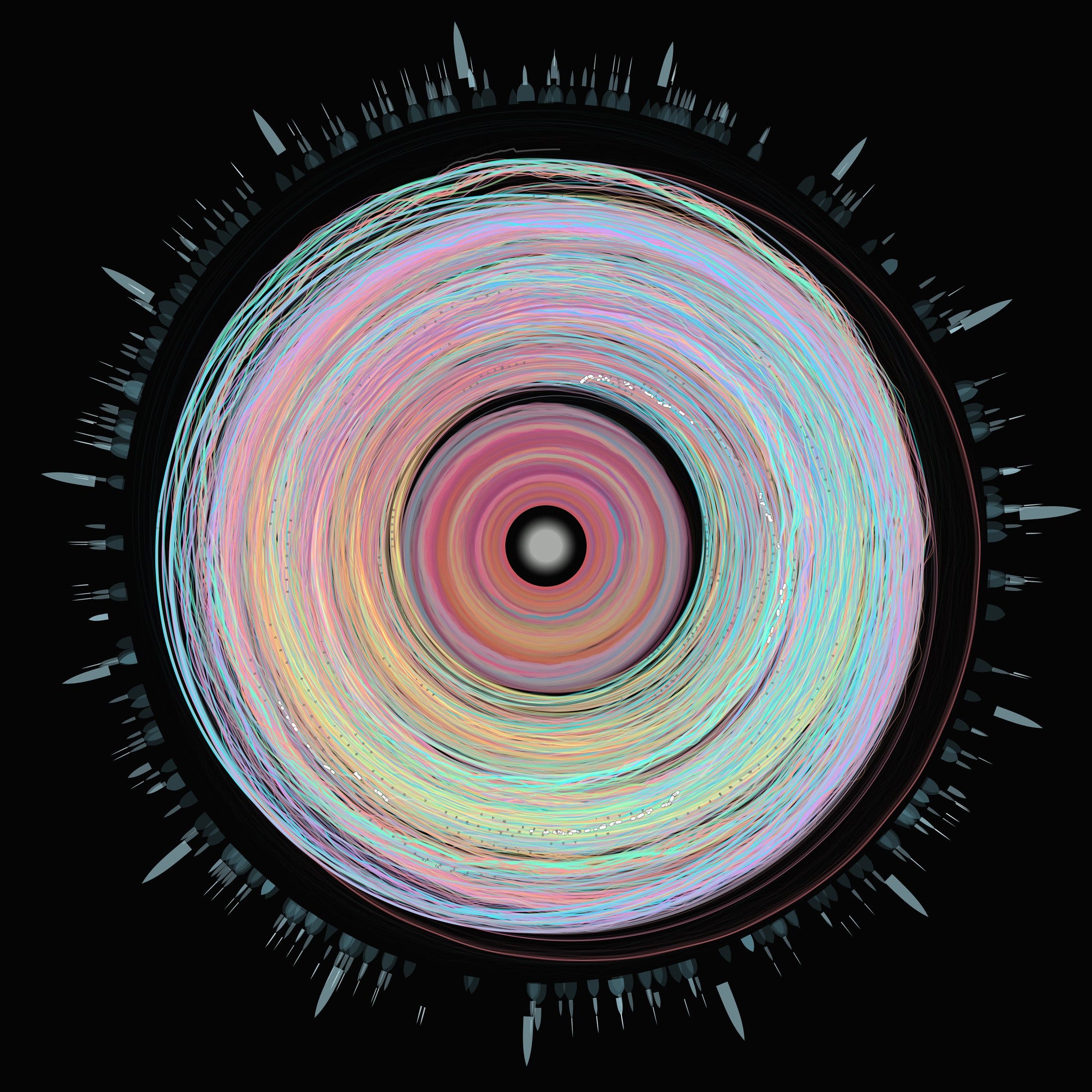
The sonicture shows this before it shows anything else. Of eighteen sections, the last one runs a hundred and five seconds, nearly a third of the whole track, and it carries the entire second act: the dream, the last verse, the second avalanche, the chord. And here is the thing only A Day in the Life does. The tension envelope, the wobble in the ring edges that reads harmonic unrest, hits its maximum at the very end of that stretch, at 5:10, right where the chord lands. Full instability, on the most consonant sound in the song: one major chord, held. The geometry finds maximum tension in the moment every listener considers resolution.
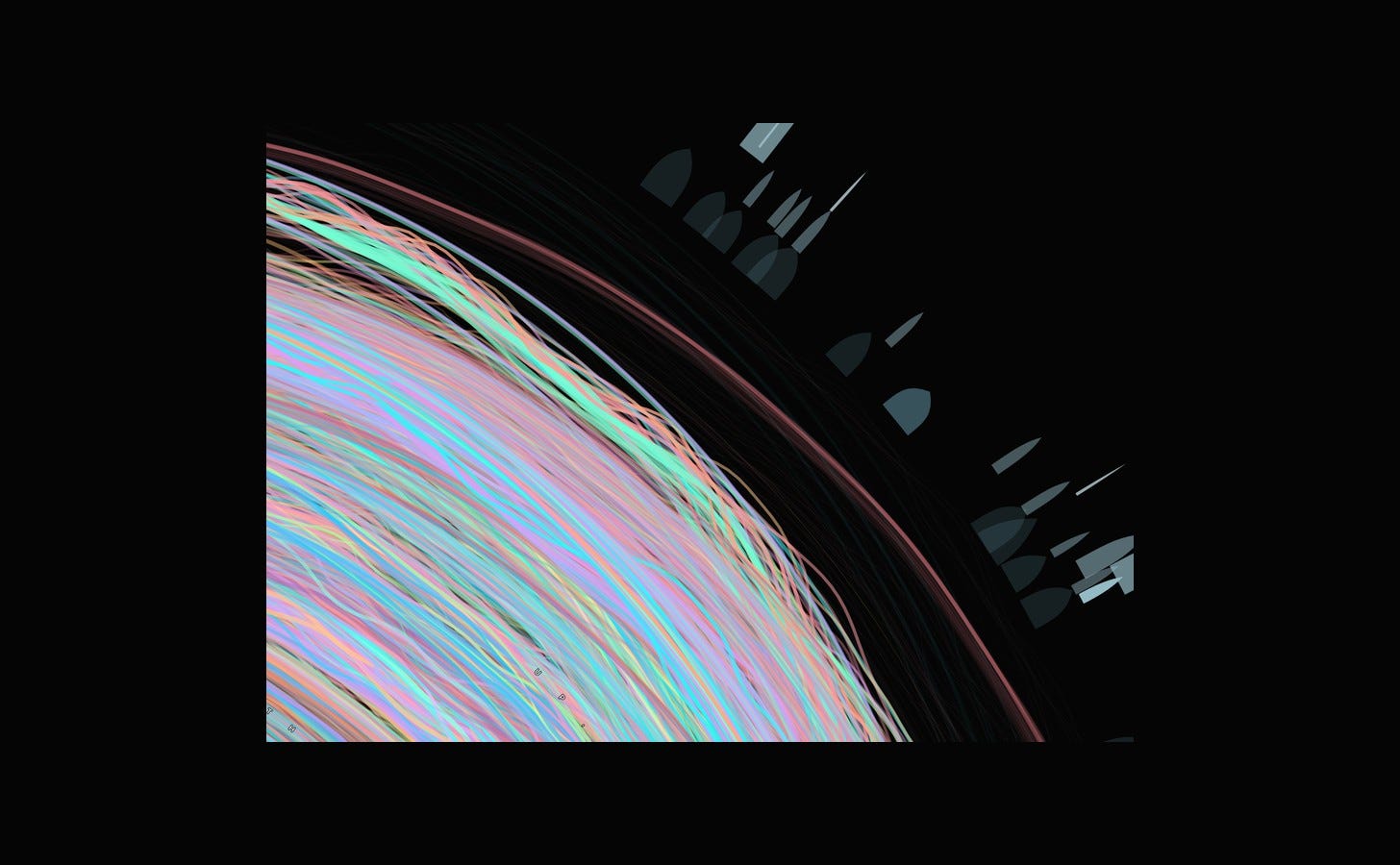
Listen to its truth. As the chord dissolves, the faders ride it up into hiss and beating overtones; the harmonics no longer sit still against each other, they shimmer and quarrel as the level rises to meet them. That is the wobble. A chord at rest, made unstable by being held past the point any chord should be held. The song’s calm resolves; its portrait shudders. One sound, two effects.
Set against that, the loudest instant falls early, at 2:14, forty percent in, where the first avalanche ignites: forty players told to climb from their instrument’s lowest note to its highest, each at their own pace. That is where the rings swell thickest. The song front-loads its volume and back-loads its unrest. The peak you feel and the peak that unsettles live in different places.
Between those two events sits the seam. This is two songs stitched, and the geometry keeps the stitch visible. The harmony barely travels: Eb and F, orchid and blush, hold the centre of both halves. On one side Lennon, floating and detached. On the other McCartney, wide awake. And a real alarm clock at the joint, kept in the take.
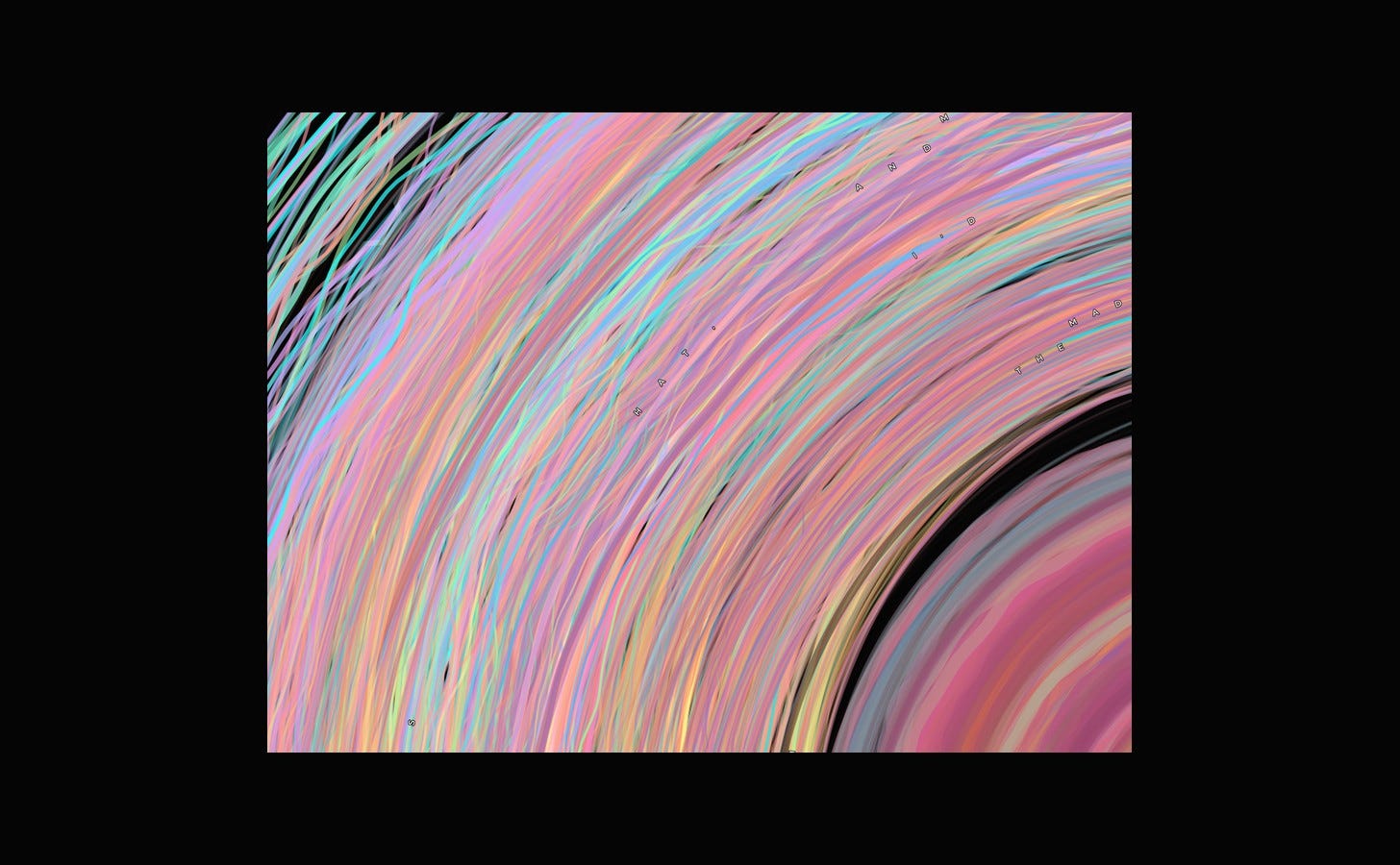
Lennon’s opening, I read the news today, oh boy, drifts with almost no rhythmic incident at all; in those first stretches the percussion barely registers. Then McCartney’s I woke up, fell out of bed arrives brisk and mundane and the strikes multiply, waking, dressing, catching the bus, a body in motion where the other man was dreaming. You hear it in one listen, and the image records it where the engine writes roughness: the ring edges. The opening rings lie glass-smooth, the smoothest in the song. Through the waking middle, the alarm-clock seam and the workaday sections carry the coarsest edges in the whole disc. Then the texture calms again as the dream takes the song back. Time runs outward from the centre, so it reads like weather: calm, a rough band of mid-disc turbulence, calm.
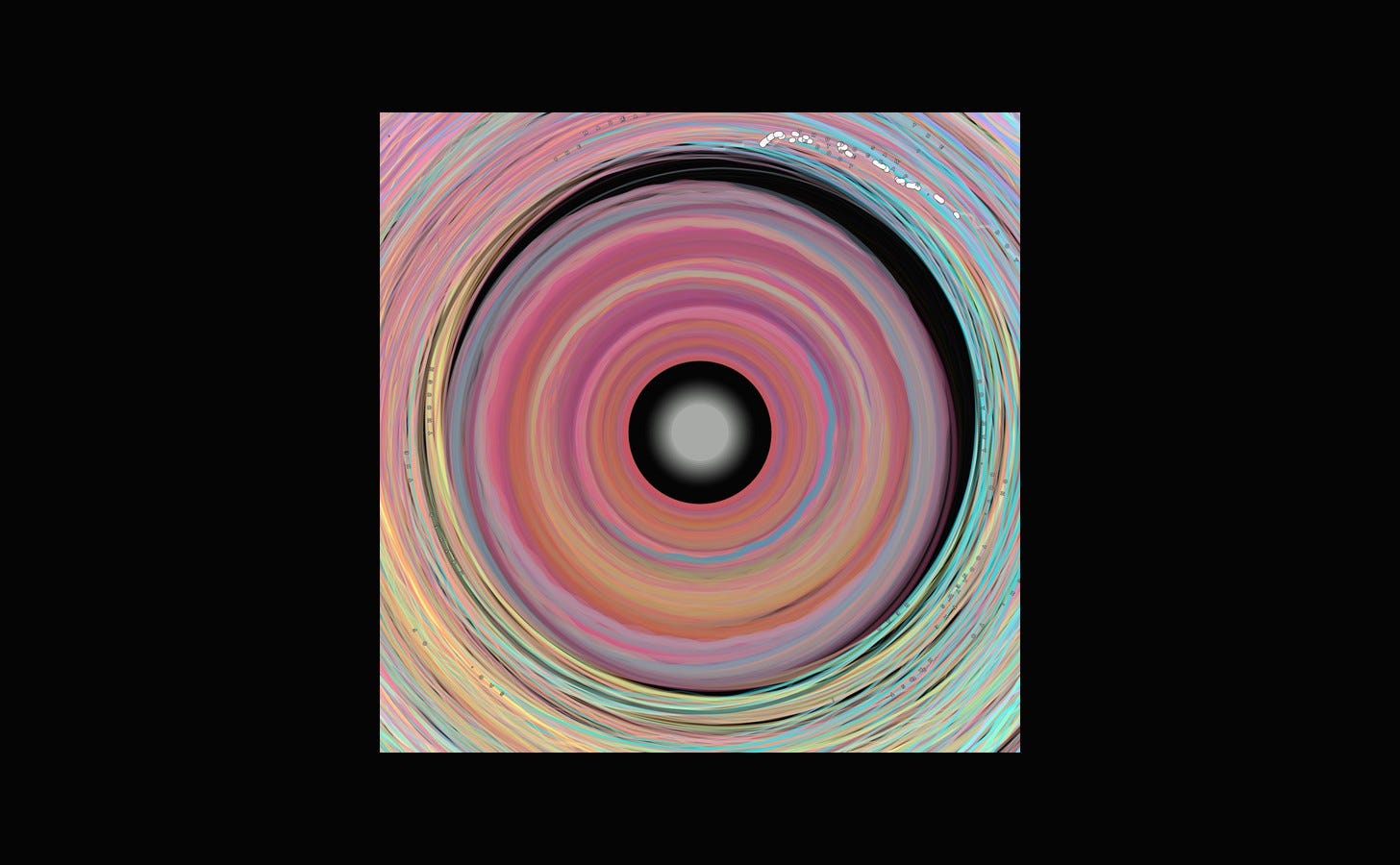
For a song this saturated with colour, nine pitch classes active, orchid and blush neck and neck at the top, coral and amber, C and G, crowding behind Eb and F, you would expect a vivid heart. Instead the core goes grey. Not because the song has no home, but because no single home wins: when forty instruments climb through every pitch from floor to ceiling, every colour in the palette sounds at once, and everything at once averages to colourless. An organized avalanche sums, at the centre, to a cloud. The percussion marks radiating past the rim are cut from the same cloth, cool slate-blue, the complement the engine derives from that neutral core. The spectrum bleeds outward from the grey in soft pastel bands, the way the crescendo bleeds upward through the orchestra.
The voice is the white thread, and it leaves knowingly. Its last line before the ending is the invitation itself, I’d love to turn you on, and then it keeps its longest silence in the song, thirty-one seconds, handing the second avalanche entirely to the orchestra. He does not sing the climb. He offers it, and steps aside, and the orchestra makes good on the offer without him.
I’d love to turn you on. Sung twice, before each avalanche, the line McCartney wrote and Lennon delivers, the ignition and the invitation. Then the orchestra goes up, and the last time it goes up it lands on a chord the geometry draws as its single most unstable stroke, because a resolution held long enough stops being an answer and starts being a presence. The song ends. And half a century later you’re still hearing the tremble of the ring at the edge.
every mark comes from the song.
to read a sonicture: learn · to watch one drawn: reveal